
Wall Insulation in Newark, NJ
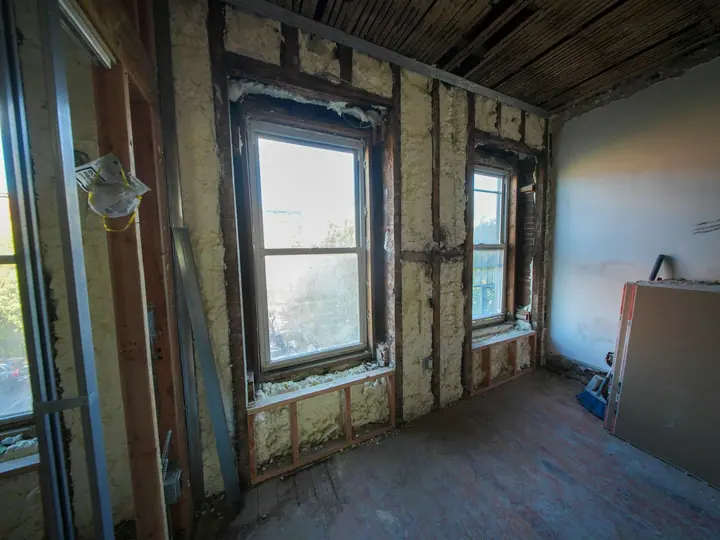
Uninsulated or under-insulated walls are a major source of drafts and heat loss, especially in older homes. The challenge is that walls are already finished. Dense-pack wall insulation solves that: insulation is blown into the cavity through small holes that are then patched, so you gain a warmer, quieter home without gutting the interior.
Why wall insulation matters in Newark
Many older buildings in Newark have wall cavities that are empty or contain only a thin layer of old material. Brick buildings and balloon-framed houses can have long uninterrupted cavities that behave like chimneys, moving air from the basement to the attic. Dense-packing fills the cavity firmly so air cannot move through it, and the added mass also helps reduce outside noise from busy streets. Before we insulate, we inspect for moisture problems, check the wall type and look for hazards such as old wiring. If there is any sign of damp or deteriorating masonry, we will tell you to fix that first.
Signs you may need wall insulation
- Cold, drafty exterior walls in winter
- Walls that feel warm and radiate heat in summer
- Visible temperature differences with an infrared thermometer
- No insulation in an older house or addition
- Street noise coming through exterior walls
How we do it
Inspect the walls
We determine the construction, check for moisture and probe the cavities.
Mark and drill access
Small holes are drilled at each cavity, typically from the inside or outside depending on the finish.
Dense-pack the cavity
Insulation is blown in at density high enough to fill voids and resist settling.
Patch and seal
Access holes are plugged and patched so they are ready for painting or siding repair.
Review the work
We walk through the job and note any areas we could not fill.
What you get
Warmer in winter, cooler in summer
Filling the cavities slows heat transfer through the walls.
Fewer drafts
Dense insulation limits air movement inside the wall.
No major demolition
The work is done from small access points rather than opening walls.
Many customers combine this with air sealing and weatherization or spray foam insulation to get the most from one visit.
Before you book
Wall jobs vary by the type of siding or interior finish, because access holes are made where they are easiest to patch. Brick over frame, stucco and clapboard each call for a slightly different approach. Please tell us about any known moisture, past water damage or old wiring. Plan to repaint small patched areas afterward, and we can discuss matching exterior finishes so the access points blend in.
Older walls sometimes have hidden obstacles, such as fire blocking, diagonal bracing or old wiring, that can stop material from filling the cavity. We use a small camera or probe and careful fill technique to check for voids, and we tell you honestly if a particular cavity cannot be filled completely so there are no surprises.
Serving Newark and nearby
Wall insulation suits many Newark homes with plaster-and-lath or older brick-and-frame walls, and we also work in East Orange, Orange, Bloomfield, Nutley and Montclair.
Wall Insulation questions
Will you have to open my walls?
Usually only small access holes. The holes are patched after the job.
What material do you use?
Typically dense-pack cellulose or fiberglass, chosen for the wall type and your goals.
Is it safe for old houses?
Generally yes, but we first check for moisture and old wiring. If we find a risk, we will tell you before proceeding.
Does wall insulation reduce noise?
It often reduces airborne noise somewhat, though results vary with the building.
Related services
Ready for cleaner air and a more comfortable home?
Call any time, day or night, or request a free quote and we will get back to you quickly.